A Reflection on Sovereignty, Transformation, and the Case of Pakistan
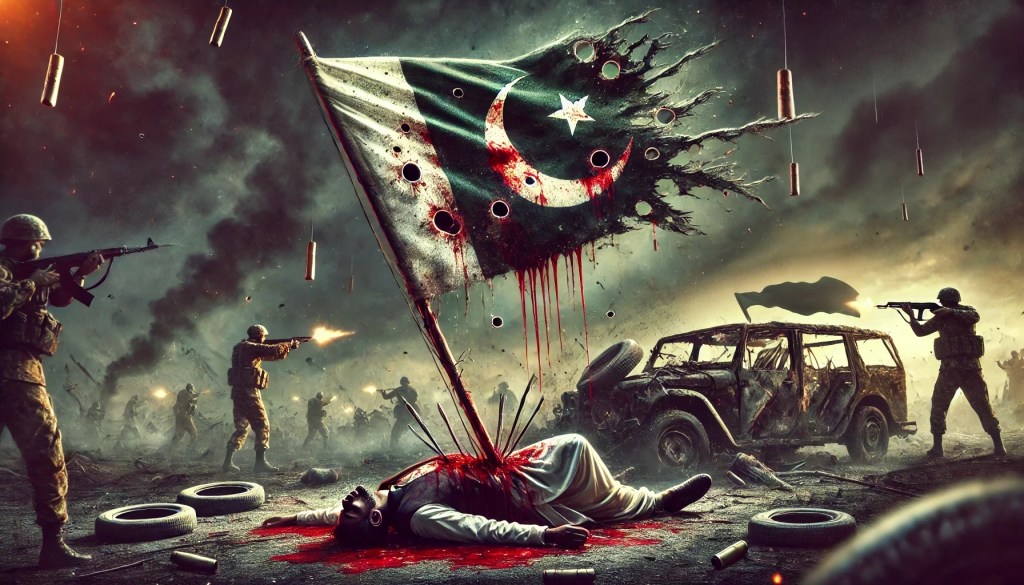
In life, the inevitability of death is accepted. Doctors declare the time of death when all attempts to revive a person fail. Businesses, too, reach their limits, filing for bankruptcy and ceasing to operate when insolvency sets in. But when it comes to nation-states, the idea of “death” becomes taboo. Why are states seen as sacred entities whose borders must endure, even when maintaining them requires immense suffering or bloodshed? Can a country die—and, more importantly, should it?
This question resonates deeply in the historical and present context of Pakistan, a country born from the partition of British India in 1947 to secure the rights of Muslims in the subcontinent. Yet, despite its noble founding premise (as believed by a big majority of Pakistanis), Pakistan’s trajectory has been marked by military rule, feudal control, religious extremism, and deep economic and social challenges. The secession of East Pakistan to form Bangladesh in 1971 highlights that even nations are not immune to existential fractures. Today, Pakistan faces a host of challenges that raise questions about its long-term viability and the need for transformative thinking.
Pakistan seems to have learned little from the mistakes of its past. The story of Baluchistan, a province rich in minerals and natural resources, mirrors many of the injustices seen in East Pakistan. Despite its contributions to the country’s economy, the ethnic Baluchi population has long been subjugated under the rule of Sardars (feudal lords), who have deliberately kept the region underdeveloped. Minimal investment in infrastructure, healthcare, education, or economic opportunities has left Baluchistan one of the most neglected regions of the country.
A similar tale of neglect and exploitation exists in Karachi and the surrounding urban centers of Sindh. This area, predominantly home to the Urdu-speaking descendants of Muslims who migrated from India during partition, has historically been an economic engine for the country. Karachi alone generates over 70% of Pakistan’s tax revenue and has significantly contributed to building the nation’s institutions. Yet, it has been systematically pushed into decline through inadequate infrastructure investment, a quota system that disadvantages the city’s residents, unchecked rural migration, and rigged census practices that deliberately undercount its population. These systemic failures mirror a pattern of alienation that once led to the loss of East Pakistan.
If that weren’t enough, the events of the past two years have reaffirmed that instead of learning from the mistakes of its past, Pakistan has doubled down on its failing approaches. This period witnessed the toppling of a democratically elected government, a blatantly rigged election that disregarded the people’s mandate, and the imprisonment of the country’s most popular political leader along with his family and party members. The armed forces even opened fire on peaceful protesters, resulting in the tragic deaths of several innocent civilians. These actions have only deepened the nation’s crises, further eroding trust in its institutions and democratic processes.
The Sacredness of Borders and the Fragility of Pakistan
Pakistan’s creation was tied to the idea of preserving the rights of a minority group in the Indian subcontinent—Muslims—within a predominantly Hindu-majority region. The nation’s borders were drawn hastily and bloodily during the partition of India, resulting in the deaths and displacement of millions. From its inception, Pakistan’s borders have symbolized not just territory but the ideological foundation of its existence.
However, ideology alone could not hold the country together. The secession of East Pakistan in 1971, driven by economic marginalization, linguistic discrimination, and political suppression, gave rise to Bangladesh. This event revealed the fragility of a state whose governance failed to meet the needs of all its citizens. The experience of 1971 serves as a stark reminder that states can and do fracture when their internal contradictions become untenable.
The Current Reality: Is Pakistan Sustainable?
Fast forward to today, and Pakistan finds itself facing dire challenges. The country’s reliance on foreign aid and loans has become a hallmark of its economic fragility. Key indicators—education, healthcare, infrastructure, and human rights—have all declined, creating a bleak outlook for its citizens:
- Economic Collapse: Pakistan’s economy struggles with crippling debt, inflation, and unemployment. Investment is deterred by political instability and a deteriorating business climate.
- Social Decline: Education and healthcare systems have drastically underperformed, leaving the population underserved and disillusioned.
- Human Rights Concerns: Minority and women’s rights are persistently under threat, exacerbated by rising religious extremism and a lack of effective governance.
- Feudal and Military Dominance: A feudal elite and military establishment have historically wielded disproportionate power, undermining democratic institutions and stifling progress.
These realities paint a picture of a state that, much like East Pakistan in 1971, struggles to serve the basic needs of its population. Yet the idea of dissolving or reimagining Pakistan’s borders remains taboo, despite the historical precedent and ongoing challenges.
Lessons from history
The reunification of East and West Germany in 1990 offers a contrast to Pakistan’s trajectory. When East Germany became economically and politically untenable, its citizens demanded change, leading to a peaceful reunification process supported by shared cultural identity and international consensus.
Similarly, the formation of Bangladesh in 1971, though born out of conflict, showed that when a state’s governance becomes oppressive and exclusionary, dissolution can become inevitable. Bangladesh has since carved out a distinct path, achieving significant progress in economic development and human rights relative to its early years of independence.
These examples highlight two key lessons:
- Shared Identity Matters: Germany’s reunification was aided by a strong sense of shared history and culture. Pakistan’s failure to address linguistic and cultural diversity contributed to its split in 1971.
- Governance and Inclusion Are Key: States that fail to govern inclusively or provide for their citizens face existential risks, as seen in East Pakistan’s secession.
Rethinking the Inviolability of the State
In the case of Pakistan today, the question arises: can a state that is economically unsustainable, politically fractured, and socially regressive endure indefinitely? Or should it be open to transformation, whether through decentralization, reimagined borders, or structural reforms that address its deep-rooted challenges?
The taboo against questioning state viability often stems from fears of violence and instability. Indeed, the partition of India and the formation of Bangladesh were marked by immense suffering. But this history also underscores the need for rational, inclusive discussions about the future of states that prioritize the well-being of citizens over the sanctity of borders.
The Path Forward
Pakistan’s survival depends on its ability to address the systemic issues that have plagued it since its inception. This includes:
- Empowering Democratic Institutions: Reducing the influence of feudal and military elites to allow for accountable governance.
- Economic Reforms: Diversifying the economy, fostering investment, and reducing dependence on foreign aid.
- Social Development: Prioritizing education, healthcare, and human rights to build a more equitable society.
- Respecting Diversity: Embracing the country’s ethnic, linguistic, and cultural diversity as a strength rather than a threat.
If Pakistan fails to enact these changes, it risks following the path of East Pakistan in 1971. However, history also shows that transformation is possible. Whether through decentralization, regional autonomy, or a complete reimagining of its governance structures, Pakistan must confront its realities and make hard choices.
Can a country Die?
The case of Pakistan forces us to reconsider the notion of state inviolability. Just as businesses adapt, merge, or dissolve when they become unsustainable, states should not be immune to rational discussions about their viability. While the sacredness of borders and the fear of instability often stifle such conversations, history—from Germany to Bangladesh—shows that transformation is both necessary and possible.
Ultimately, the purpose of a state is to serve its citizens. When it fails to do so, clinging to the status quo may cause more harm than good. By questioning whether states can—and should—die, I open the door to creative solutions that prioritize the well-being of people over the preservation of political constructs. In Pakistan’s case, this conversation is not just necessary—it may be inevitable.
A concerned Pakistani
 Thirst of a Sieve
Leave a comment